At the outset, the label of “Prolonged CoVID Syndrome (PCS)” or “Long CoVID” has a similar connotation as Typhoid Mary, The Hundred Years War, The Dark Ages, or The Bubonic Plague. Modern myths, misleading information from our own government and social media, as well as broadcast media shenanigans, collectively created panic, fear, and a feeling of ennui (despair). All of this for a viral illness that, like most other viral illnesses, requires a calm and commonsense approach.
CoVID is a virus, technically labeled as 2019 Novel Corona Virus-2. It gained notoriety in 2019 when it was the causative agent in a worldwide epidemic of viral infections called CoVID-19 disease. The disease characteristics include fever, lethargy, breathlessness, muscle achiness, fatigue, headaches, dry cough, chest tightness, and altered thinking. Like many common microbes, this virus can cause death when contracted by individuals who already have a compromised (weak) immune system.
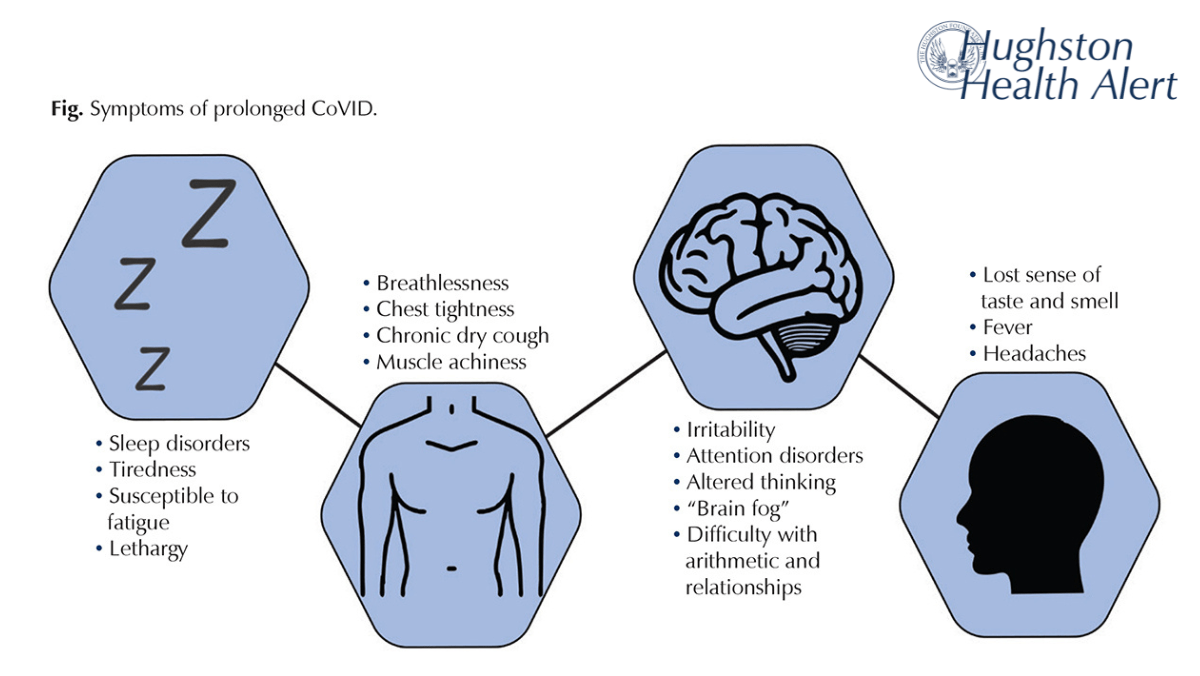
“Prolonged, or Long, CoVID” is a condition in which some of the symptoms persist far beyond the expected recovery period of about 2 weeks, which can be many weeks or months later. For some, it may be years. Additionally, and probably quintessential to PCS, there is a phenomenon called “CoVID brain fog” which resembles having had a concussion and now experiencing irritability, attention disorders, sleep disorders, difficulty with arithmetic and relationships, headaches, problem-solving activities, depression, fatigue, decreases in the senses of taste and smell, and a chronic dry cough. Similar to the acute illness, the prolonged form can be difficult to diagnose because available tests are not 100% reliable, since they lack sensitivity and the particularities of the condition. Physicians base the diagnosis on the history rather than the physical findings or lab tests. (Fig.) The current thought is that most of these problems that are lumped together under the label of PCS may be residual inflammatory processes as well as disorders of metabolism and disordered neurotransmitter chemicals.
What else could be responsible for these long-term problems? There are several well-known conditions that need to be considered. Hypothyroidism, pernicious anemia (low hemoglobin), adrenal insufficiency (kidney disease), seasonal affective disorder, situational depression, Epstein-Barr viremia (also called Mono), fibromyalgia, and even paroxysmal atrial fibrillation can cause many of these symptoms. However, with the proper testing physicians can eliminate these conditions.
Treatment focuses on returning the patient to their original functional state. The treatment plan must be individualized and tailored to the patient’s special needs and capabilities. The foundation of any treatment must include well-rounded nutrition, active rest, restful sleep, mindfulness, relearning how to stay on task, and returning to an active routine to include work and play. The unproven, yet often included, treatments include nutritional supplements, fortified drinks, herbal additives, ultraviolet light therapies, and magnet applications.
The outlook for these patients can be bright if the patient understands that recovery will take time; possibly, 8 to 12 weeks, so patience is the key. The patient must be convinced that they can change the focus of their life from this compromised state to a life of unlimited potential. The patient should be educated about the fact that this will not shorten their life and that they are in control of their recovery.
Patients can achieve the best outcome with a common-sense approach to nutrition, outdoor activity, adequate sleep, and limiting unnecessary medication use. The pitfalls to treatment come from pursuing treatments that have unproved claims for success, making treatment decisions under duress, or panicking whenever there is a setback. Patients must be careful about where news items and treatment recommendations originate. Information from pharmaceutical companies must be weighed regarding the true intention of the drug maker. Patients should not prioritize government agencies over their own private physician.
In the final analysis, no one can be totally certain in making an accurate diagnosis of prolonged CoVID syndrome, let alone prescribing a guaranteed treatment. The best advice that physicians can offer is for the patient to take personal responsibility for his or her own health and consult with a doctor that they trust. Never forget the healing properties of getting outdoors in the sunshine and performing gentle exercise enough to break a sweat.
Author: John M. Henderson, DO, FAAFP | Columbus, Georgia
Last edited on April 10, 2026